BlogClassical Sanskrit Poets of India
Bhavabhuti
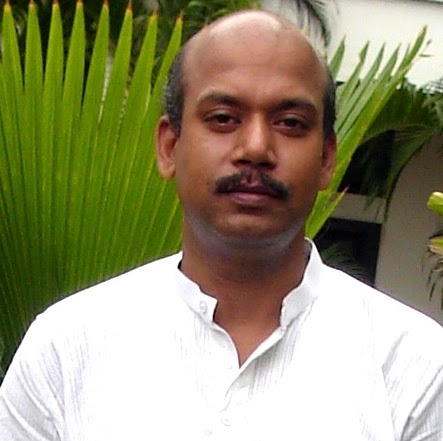
In the matter of eminence as a poet, Bhavabhuti stands next to Kalidasa. He lived in seventh century A.D. He is believed to have been the court poet of King Yashovarman of Kannauj. His grandfather’s name was Bhattagopal. His father’s name was Nilakantha and his mother’s name was Jatukarni. Jnananidhi was his guru from whom he got all his learning. Bhavabhuti was a man of high erudition, well-versed in almost all important branches of knowledge. Out of many of writings only three plays of him have come down to us. These three plays are – Malatimadhava, Mahaviracharita and Uttararamacharita.
Bhavabhuti’s Malatimadhava is a romantic social play. In ten acts, it deals with the ordinary people of the society. The plot of this play centers round the love stories of Malati, daughter of a minister Bhurivasu and Madhava, son of another minister Devavrata. It also depicts the love between Makaranda, a friend of Madhava and Madayantika, a friend of Malati. Sometimes this play has been designated as the Romeo and Juliet drama of India with a happy termination. The plot of this drama has been handled very carefully by Bhavabhuti.
The other two dramas of Bhavabhuti are based on the story of Ramayana. He has dramatized the entire story of the Ramayana in these two plays.
Mahaviracharita, in seven acts treats the subject matter of first six sections of Ramayana. It begins with Rama’s visit to Viswamitra and ends with his return to Ayodhya. This is supposed to be the earliest writing of Bhavabhuti. Here one finds that many detached episodes and characters of Ramayana have been brought together and presented in a beautiful way in order to form an artistic unity. It is a drama of events narrated in long dialogues. From this point of view this drama is more poetic than dramatic.
Uttararamacharita of Bhavabhuti deals with the history of Rama's later life. The drama begins with Rama’s coronation after his return from exile and ends with the reunion of Rama with Sita. Bhavabhuti takes the theme of the seventh section of Ramayana of Valmiki and develops the plot of this drama by introducing new characters and events. This drama of Bhavabhuti is famous for its note of deep pathos. It is the karaunarasa or the pathetic sentiment that is predominant in this drama. And also it is this drama that has made Bhavabhuti immortal. Bhavabhuti is found at his best in delineation of character, description of nature and handling of the plot. Compared to the style, diction, language, presentation of other two dramas of Bhavabhuti Uttararamacharita is more simple and dramatic.
It is often seen in the dramas of Bhavabhuti that there are too many characters crowding the stage and too many events blurring the sequence of the theme. But Bhavabhuti’s plays are complimented on their clear delineation of emotions and sentiments and on their wonderful felicity of literary expression.
Here we provide few instances from Bhavabhuti’s Uttararamacharitam:
In the first act of Uttararamacharitam, Lakshmana is showing Rama and Sita the life history of both of them as illustrated by an artist. While seeing the various scenes Sita, at one point says:
Sita - My lord, I have a thing to say, a desire springs in me by the sight of the painting.
Rama - You are welcome to speak it out.
Sita -I feel ( wish) that I should once more wander in those serene and majestic sylvan avenues, and that I should again bathe in the divine Ganges, a plunge in which is so purifying, gladdening and cooling.
Rama -Dear Lakshmana !
Lakshmana -Here I am.
Rama -The elders have just sent word that her desires should be fulfilled without delay. Prepare (therefore) a carriage that moves lightly and does not jolt.
Sita -My lord, you too should accompany me there.
Rama - O you hard-hearted, do you need tell me this?
Sita - Then I am glad at it.
Lakshmana - As your lordship commands. (exits)
Rama -Let us sit here awhile, my dear, near the threshold of the window.
Sita - Let it be so. I am really trounced by the sleep brought on by the exertion.
Rama- Then recline closely upon me that you should sleep (well).
Cast thy arm, covered with the particles of perspiration caused by the fatigue and excitement, round my neck, inspiring new life into me as it were, and possessed of the grace of a necklace of moon-gems melting under the kiss of the lunar rays.
(Helping her to do so, with delight). My dear, what is this!
I cannot determine whether it is pleasure or pain, whether stupor or sleep; whether the working of poison, or rapturous joy: at every touch of thine a certain sensation comes upon me, which, stupefying all my senses, now bewilders my con¬sciousness, now paralyses it.
Sita -It is your constant love for me; what else could it be?
Rama - These thy sweet words, 0 lotus-eyed one, cause the wither¬ ed flower of my life to bloom, gladden me, lull all my senses into peace, serve as nectar to the ears and as a sovereign balm to the heart.
Sita -you sweet-speaker, come, let us lie down for rest.
(Looks about for something to sleep on).
Rama -What are you searching for, my dear?
Ever since the time of our marriage, whether in the house or in the wilderness, in the days of childhood and thereafter in those of youth, this arm of Rama has been thy pillow, lulling you to sleep and not resorted to by any other woman.
Sita -(Gesticulating that she sleeps). It is so, my lord it is so. (Sleeps).
Rama -How now, she, of pleasing address, has gone to sleep on my bosom! (Gazing upon her).
She is the very Lakshmi in my house, and a pencil of nectar to my eyes; her touch is a thick sandal-paste to my body; this her arm twined round my neck is as cooling and smooth as a pearl-string; what about her would not be pleasing (only), but separation from her is exceedingly unbearable.
Here is the original Sanskrit text of the above description.
Sita - aryaputra etena chitradarshanena pratyutpannadohadaya asti mama vijnapyam. (ka)
Rama – nanvajnapaya.
Sita – jane punarapi prasannagambhirasu vanarajisu viharisyami pavitrasaumyashishiravagaham bhagavatim bhagirathimavagahisya iti. (kha)
Rama – vatsa lakshana.
Lakshmana – esosmi.
Rama – vatsa achiram sampadaiyosya dohada iti sampratyeva gurubhih samdistam. Tadaskhalita sukhasampatam rathamupasthapaya.
Sita – aryaputra yusmabhirapi tatra gantavyam. (ka)
Rama – ayi kathinahridaye etadapi vaktavyameva.
Sita – tene hi priyam me. (kha)
Lakshmana – yathajnapayatyarya. (iti niskratna)
Rama – priye atra vatayanopakanthe muhurtaM samvistaubhavava.
Sita – evam bhavatu. Apahriye khalu parishramajanitaya nidraya. (ga)
Rama – tena hi nirantaramabalambasva bhamatra shayanaya.
Jivayanniva sasadvasashramasvedabinduradhikanthasmarpytam.
Bahuraindavamayukhachumbitasyandichandramaniharavibhrama.
( tatha karayansanandam ) priye kimetat.
Vinischetum shakyo na sukhamiti va dukhamiti va
Pramoho nidra va kisu visavisarpa kimu mada.
Tava sparshe sparshe mama hi parimudhendriyagano
Vikarashcitanyam bhramayati cha samilayati cha.. 35..
Sita – sthira prasada yuyamita idanim kimaparam. (Ka)
Rama – mlanasya jivakusumasya vikasanani
Santarpanani sakalendruyamohanani.
etani te suvachanani saroruhakshi
karnamritani manasascha rasayanani.. 36..
Sita – ( vihasya ) priyambada ehi. samvishava. (ka)
( iti shayanaya samantato nirupayati )
Rama – ayi kimanveastavyam.
Avivahasamayad grihe vane shaishave tadanu yauvane puna.
svapaheturanupashritonyaya ramavahurupadhanamesa te.. 37..
Sita – (nidram natyayanti.) astyetat. Aryaputra astyetat. ( iti svapiti. ) (ka)
Rama – katham priyavachana me vakshasi prasuptaiva. ( nirvarnya. )
iyam gehe lakshiriyamamritavartirnayanayo-
rasavasya sparsho vapusi bahulaschandanarasa.
ayam bahuh kanthe shishiramasrino mauktikasarah
kimasya na preyo yadi paramasahyastu virahah.. 38..

Comments
No comments yet. Be the first to share a reflection.