A Call for the Propagation of Sanskrit
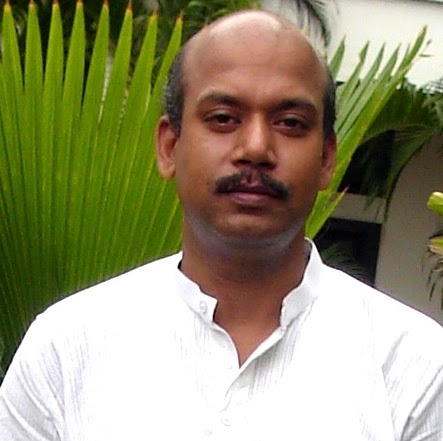
A Call for the Propagation of Sanskrit
Dr. Sampadananda Mishra
Sanskrit is one of the oldest languages of the world. The deeper one goes into it the more amazed one is by the beauty and perfection of this language. Whichever aspect one explores, there seems to be no limits to its treasures and wonders. Its very name means “refined” or “sculpted to perfection”. It is through this language that India has been expressing herself abundantly and incessantly for centuries, and its future rests much on this most dynamic language. But in the recent past, we have been cut off from this voluminous body of the highest wisdom, knowledge and genius through the alienation and relegation of Sanskrit in our schools and universities. This trend is only now beginning to change, and the resurgence of Sanskrit in all the fields of life would also mean a revival of the true spirit of India and its soul-force. It is through Sanskrit that we would be able to connect ourselves with all the puissance and the creative thrust which propelled our forefathers to form one of the greatest civilisations in the past.
We now have to recover first all that was best and ennobling in the past, and the recovery of Sanskrit as the language of the soul of India is an important step towards this. It is not enough to discover that Sanskrit is the most appropriate language for the most sophisticated Computers; we must go forward and find its imperative utility in all spheres of life.
We all have a tremendous amount of work to do in the field of Sanskrit and we all need to come together to discuss the issues related to bringing about a wider and deeper understanding and acceptance of the Sanskrit language. The task is high and difficult and may take a long time, but a focused collective endeavour and mutual co-operation amongst all of us who have already taken certain initiatives in this direction, can bring wonderful results. Keeping all these in mind here I give a list of proposals for the propagation of Sanskrit.
- Preparation of an exhaustive database on all aspects of Sanskrit.
- Preparation of a network of all organisations working in the field of Sanskrit.
- Stress on spoken Sanskrit and to expand the work which is already being done by many institutions.
- The commencement of the National Manuscript Mission has been a great contribution in the field of the Manuscripts. But it does not mean that all others should stop making any effort in this matter. Awareness should be created in the public with regard to the great heritage of the Manuscripts and their preservation. More and more people from related fields should be trained in Manuscriptology. Preservation is must. But this is not all about the Manuscripts. Efforts should also continue to study them and bring them into the light.
- There are a large number of scientific texts in Sanskrit which are of great importance to India and her development. We need to bring together qualified and interested scientists and Sanskrit scholars who can identify the manuscripts, decipher their true meaning and translate them.
- We have to give a special stress on bringing Sanskrit to the children of India in a way which is simple, interesting and appealing. For this we need to prepare materials which will include:
i. Books of different types.
ii. Audio Cassettes.
iii. Video Cassettes of films which could also be shown through the cable T.V.
iv. Preparation of games and toys.
v. Preparation of CD Roms on different topics including CD Roms for
learning Sanskrit. - There is no Sanskrit to Sanskrit dictionary available. If we want to teach Sanskrit through the Sanskrit medium we have to prepare this. The format and the presentation need to be worked out.
- A list of the journals and magazines in Sanskrit has to be compiled and made available to all who love Sanskrit.
- Teachers are a very important element for the teaching of Sanskrit. But most teachers have learnt and now teach Sanskrit in old-fashioned ways. We need to prepare resource materials for them and organise workshops and teachers’ training programmes so that Sanskrit could be taught in an interesting manner through the medium of Sanskrit.
- The coinage of Sanskrit terms and words for common objects as well as for technical subjects is being felt as a growing need. However, there are a large number of issues involved. This work needs to be taken up by a group of dedicated persons who will go in depth in all the relevant issues and then create anew lists of suitable words, which will find wide acceptability.
- A lot of work in Sanskrit is being done outside India. Information regarding this needs to be collected.
- While preparing new materials in Sanskrit we must remind ourselves that the whole vast ancient literature in Sanskrit, covering all the branches of knowledge, had been not only informative but also formative. It is because of this unique characteristic that it moulded the Indian life. Therefore new forms also should be, in every way, attractive, beautiful but educative and elevating also. Refinement should be the very first note in the field of Sanskrit.
- We should prepare suitable material as text books for teaching Sanskrit in schools. For this the whole approach of teaching and the contents need to be changed in order to make the books interesting for the students. As a first step it would be necessary to collect the existing text books from all the States.
- A group to be formed to make a selection and list of the best books available in Sanskrit on different topics for different ages. The information would include the name of the book, the author, the publisher, the price and a small note about their contents and special features. The list would naturally be subjective and will change with time. However such a list would be very useful for parents and educational institutions.
- There are many traditional centres like “Mathas” where Sanskrit teaching and learning is taking place in a major way but the methods of teaching are very old. We should make efforts to help this process in the light of modern teaching methodology.
- There is a growing need to provide distance education in Sanskrit. There are some institutions which are fulfilling this need. This work needs to be strengthened and expanded.
- There are many well-written books which have gone out of print. We need to identify and prepare a list of those popular books which were published long back and are not available now. It should be the responsibility of many institutes, organizations and even individuals to reprint those books and make them available to the public.
- Almost all the padyakavyas or poetical compositions in Sanskrit follow a metrical structure. Therefore to understand and appreciate them the knowledge of metrics or chandas is essential. But it is a matter of regret that this subject does not form a part of curriculum of any Sanskrit school or department. So it would be a remarkable attempt to introduce chandas in an interesting manner to the Sanskrit students.
Efforts of many organizations, institutions and individuals in any of the above fields are appreciable. But it would be nice if we all can have some connection with each other in order to facilitate the propagation in a wider way. With this purpose I write to all of you and hope that I will have a good response. I will be happy if this article can be published in as many journals and magazines promoting Sanskrit and Indian culture.
Thanks
Sampadananda Mishra
“The ancient and classical creations of the Sanskrit tongue, both in quality and in body and abundance of excellence, in their potent originality and force and beauty, in their substance and art and structure, in grandeur and justice and charm of speech, and in the height and width of the reach of their spirit stand very evidently in the front rank among the world’s great literatures. The language itself, as has been universally recognised by those competent to form a judgment, is one of the most magnificent, the most perfect and wonderfully sufficient literary instruments developed by the human mind; at once majestic and sweet and flexible, strong and clearly-formed and full and vibrant and subtle…”
Sri Aurobindo
1 comment
Sign in with Google to join the conversation.
Sign in to comment
Venkata dilip kumar
As a response to his clarion call, I would like to volunteer with whatever little I am blessed with to contribute to his noble crusade. I have already suggested to him I could sponsor an exhaustive course on sandhi and samasa in sanksritam to be conducted by him under the auspices of SAFIC- I do hope Guruji finds a little time in his busy schedule to structure such a course with materials.
Of late, Guruji has been active with his online classes on the internet with Language Curry and zoom, etc. May these efforts grow greater in reach and spread across the globe.
Not to strike a jarring note, but to highlight what Dr. Mishraji is already doing to distribute knowledge of Sanskrit language and literature through the medium of English, as this has great potential in connecting not only non-Indians with Sanskrit and its treasures, it is also a vital medium for many, many Indians. Also we must not undermine the importance of English, a modern language and a bridge to so many billions of people, and its modern scientific vocabulary as well its incomparable treasure of human emotions, experiences and knowledge over so many centuries in several fields, even from translations from other European and other major languages of the world.
This was indeed the chosen medium of Sri Aurobindo for his copious and exquisite and peerless expression of the treasures of the Sanskrit literature and spiritual experiences to the whole world.
Jai Guruji !