Blog· Writer
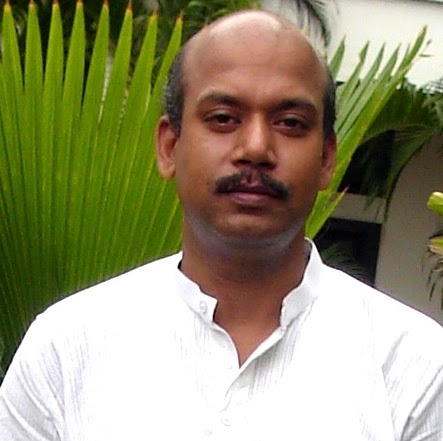
Dr. Sampadananda Mishra
67 posts
-
Introduction
Sanskrit: A Journey from Mantra to Freedom
Any language can be released from its inertia and elevated into Mantric language. It all depends upon the users of the language: how and for what purpose the language is being used. But in the case of Sanskrit it has…
8 min read ·1 comment -
The Concept of Nirashrayatva in the Gita
The Concept of Nirashrayatva in the Gita
Everyone in this world wants to be happy. No one wants any suffering, difficulties, pain or infirmity. No one ever does anything with the intention of being unhappy. No one calls for any suffering. We all run after…
5 min read ·1 comment -
Conclusion
Sanskrit – A Language of Integral Perfection
No doubt, Sanskrit is rich in vocabulary, in expression, in literature, and it has a perfect structure. The language, as much like music, brings the mind into a beautiful flow. Here we see that while reading or talking…
1 min read -
Greatness of Sanskrit Literature
Sanskrit – A Language of Integral Perfection
According to Sri Aurobindo – “The greatness of a literature lies first in the greatness and worth of its substance, the value of its thought and the beauty of its forms, but also in the degree to which, satisfying the…
3 min read -
The Power of Creating New Words
Sanskrit – A Language of Integral Perfection
As I have mentioned before a perfect language must also have the capacity to grow, to meet the demands of completely new experiences. The speaker of the language should be able to create new words to suit his needs and…
5 min read -
The Power of Expression
Sanskrit – A Language of Integral Perfection
Sanskrit is immensely capable of expressing every kind of human experience, spiritual, aesthetic and intellectual. It has an unambiguous linguistic structure. Its grammar is perfect. It is unimaginably rich in its…
12 min read -
Introduction
Sanskrit – A Language of Integral Perfection
The source of human language, as experienced and expressed by the ancient Indian Rishis, is the urge to express an inner experience. An ideal language must enable the individual to express his experience with minimum…
2 min read -
The Higher Half
Sanskrit : A Language of Consciousness
The word paraardha in Sanskrit means the more remote or opposite side or half; it also refers to the highest number (100,000 billions); in the Puranic tradition it signifies the number of mortal days corresponding to 50…
3 min read -
Aditi - The Infinite Consciousness
Sanskrit : A Language of Consciousness
The word aditi is constituted of two components: a & diti. The sound ‘a’ here is a negative prefix meaning ‘not’. The word ‘diti’ is derived from a lost root ‘di’ which means to cut, split or separate or divide. (Please…
3 min read ·1 comment -
All is filled in with Shraddha
Sanskrit : A Language of Consciousness
The word shraddhaa, in Sanskrit, is usually translated into English as trust, faith, confidence, loyalty, respect, reverence etc. But this is not all about shraddhaa. When we analyze and go deep into the root sense of…
4 min read ·1 comment
